
Introduction
From time to time, carers can be bombarded with demanding chores and, in turn, experience stress and burnout. Unfortunately, there are many occasions when distress is pathologized and medication prescribed when it would be more appropriate to focus on recommending a social remedy. This might comprise engagement in some form of purposeful alliance such as a testing physical fitness program. Alternatively, it could be within a more laidback leisure groups involved in singing, walking, bowls, gardening, and so forth. However, caregivers also may find it difficult to identify appropriate recreational pastimes in which they can meaningfully engage along with those for whom they are caring. Understandably, it is often worthwhile to spend some time checking and evaluating the suitability of what pursuit best matches their needs.
A recent meta-analysis has indicated that “…both social isolation and loneliness were significantly associated with an increased risk of all-cause mortality …” This research suggested that “Greater focus on social isolation and loneliness may help improve people’s well-being and mortality risk.”(Wang, Geo, Han, and others, 2023) Undoubtedly, the presence of genuine camaraderie can lead to life-long friendships and help to avoid and sweep away sensations of loneliness and estrangement. Membership of a social grouping, either together or separately by carers and those in need of their support, offers genuine participation in communal interests. Involvement requires both responsiveness and commitment, setting aside preoccupations and uneasiness, and has the potential to boost ‘feel good’ sensations. In particular, participation in a wide variety of musical activities and events is now widely acknowledged to be a noteworthy font of health and wellbeing.
Providing solace and putting aside for a time worries concerning daily struggles can be achieved through contributing to and sharing in music of one form or another. This can pertain to differing ages and ailments. By way of illustration, two examples from very distinct settings, one relating to youths facing challenges and another to persons with dementia are very briefly outlined.
(1) Among young people from lower social-economic backgrounds or those experiencing special educational needs and/or physical disabilities the value of inclusive music-making can be very beneficial. This viewpoint was supported by an investigation which reported that its observed results demonstrated, “… the importance and value of music engagement, especially as the means of empowering marginalized groups of young people and addressing the inequalities in today’s society.” (Levstek and Banerjee, 2021)
(2) There also has been an interest in the worth of music therapy in reducing distress for persons experiencing dementia. For instance, when comparing those in a hospital environment receiving in-person music therapy and those who did not, researchers found music therapy “…to be a valuable intervention, supporting patient mood and reducing agitation.” (Thompson and others, 2023)

“Where words fail, music speaks.” (Hans Christian Andersen)
Singing, songwriting, listening, and dancing
The persons for whom you are caring may have a particular suite of songs and tunes which they prefer – pop, jazz, country, ballads, classic, songs which they themselves have helped to compose, etc. – or they may have an eclectic taste and simply favour specific ones from across a spectrum of differing categories. For this reason, it is advantageous to explore their likes and dislikes and to observe their reactions and behaviour when melodies, along with their musical accompaniments, are being performed. Ensuring that they are involved as much as possible also will provide carers with opportunities to relax or to join in songs which enthuse them.
Moreover, listening to music involves various sectors of the human brain and can stimulate cognitive skills. Research has indicated that it can also improve cortical health and emotional wellbeing. On many occasions, it appears to enhance memory and foster thoughts of pleasant happenings from the past. These could relate to personal achievements, family weddings, the birth of children, holidays, and so forth. Similarly, attending a concert or pantomime may evoke very blissful and/or nostalgic reminiscences. Creating personalised playlists (discs which only contain much-loved performances) are very helpful for both those in need of support and their caregivers. They make available periods of joyful interludes while partaking in peacefulness and reflection.
“Music has the capacity to engage auditory, cognitive, motor, and emotional functions across cortical and subcortical brain regions and is relatively preserved in aging and dementia. Thus, music is a promising tool in the rehabilitation of aging-related neurological illnesses, such as stroke and Alzheimer disease.” (Teppo Särkämö, 2018)
There is a wide range of activities which can be organised to extend participation and potential benefits – well-chosen quizzes to foster recall of favourite performers, bands, and orchestras from bye-gone days; games involving compositions, such as ‘name that tune’, to encourage discussion and teamwork; karaoke, if contributors are confident enough, to boost engagement in individual or collective performances; and dancing, as well as being fun, to facilitate and maintain physical fitness. One ambitious event witnessed was an online transatlantic competition – a version of ‘juke box jury’ focusing on British and American pop groups and their hit songs – between teams from USA and Scotland.
Participation in choirs
Genuine membership and affiliation within a choir will ensure that all members have roles which deliver their own distinct and harmonious contributions. When well-managed, it is democratic, as opposed to having a pyramidic structure, in that there is a sharing of responsibilities. Teamwork is a key feature. Choral groups possess the power to bring about and sustain a collective ethos of solidarity, encouraging accountability and dexterity in conjunction with enriching sensations of comfort and self-assurance. Togetherness acts as a mediator for affirmative change and the enhancement of both consciousness and interpersonal skills. Public performances which are appreciated by audiences add to the pleasure of having taken part.
Inclusive choirs can act as catalysts for the improvement of feelings, comprising a fortuitous mixture of both oneness and togetherness, possibly through the stimulation and strengthening of neural pathways. Importantly, they can present opportunities for enjoyment within a therapeutic setting which offsets loneliness, anxiety, and depression among vulnerable people. The fusion of personalities within the group, regardless of perceptible troubles or additional support needs, augments mental toughness through boosting autonomy and empowerment. Members are able to take part within caring and friendly contexts in which individuals can express themselves openly and honestly, without any sense of threat or fear. This is not to say that there may be challenges to confront and overcome. Nonetheless, skilful leadership can nurture opportunities vis-à-vis creativeness and intimacy, enabling participants to experience hope and to recognize their own progress regarding security and self-worth.
“Inclusive choirs promote social inclusion by providing the opportunity for persons living with dementia, caregivers and volunteers to sing together as equals.” (Jean-Bernard Mabire and others, 2020)
Summary and concluding comments
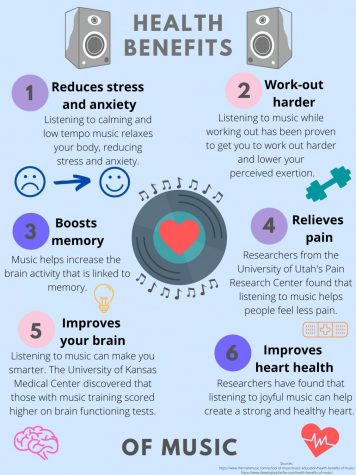
Although some of us may lack enthusiasm and may not benefit from musical activities, for many persons research studies have indicated opportunities for positive outcomes. Listening to music, singing, songwriting, and participation in dances can all provide relief from psychological distress while also being a buttress for emotional resilience and touchstones for building self-esteem. The off-loading of worries and concerns can generate a platform from which to establish buoyancy and vigour. Inclusiveness endorses self-worth for persons with additional educational needs, neurodegenerative diseases, or experiencing social marginalization. Music therapy has a significant role to play in mental health interventions, repairing ruptures in personal relationships, and assisting in recovery from abusive behaviour and trauma. It may also alleviate sleeping and nutritional obstacles and engender a basis for good brain health.
In recent years, there has been an awakening of the constructive part which the arts have to play in social prescribing on the topic of health and wellbeing for those who experience debilities, deprivation, and exclusion. Despite much progress in modern society, they have undergone circumstances which have eroded their confidence; they have become too cautious, defensive, and isolated. Anxiety and trepidation prevent them from cultivating an enriched lifestyle comprising advantageous friendships and recreational activities. Involvement in choral singing often gives rise to affirmative surges within a continuum of emotions. In practice, its powerfulness to transcend existing apprehensions and angst is truly remarkable. Participation can thrust unwanted sentiments away from sorrow and regret towards a consciousness of serenity and joy. A major benefit is the personal social-emotional experiences of self-control, insight, meaningfulness, responsibility, and the achievement of shared objectives. Collective endeavours can be targeted at overcoming feelings of stress and weariness, replacing burnout with tranquillity.
“Music gives a soul to the universe, wings to the mind, flight to the imagination and life to everything.” (Plato)
Acknowledgements and references
1. Wang, F., Geo. Y., Han, Z., and others (2023). A systematic review and meta-analysis of 90 cohorts of social isolation, loneliness and mortality. Nature Human Behaviour 7(8), 1-13.
2. Levstek, M. and Banerjee, R. (2021). A Model of Psychological Mechanisms of Inclusive Music-Making: Empowerment of Marginalized Young People. Music and Science, Volume 4. Published online by Sage Journals: 2021.
3. Thompson, N., Iyemere, K., Underwood, B. R., and Odell-Miller, H. (2023). Investigating the impact of music therapy on two in-patient psychiatric wards for people living with dementia: retrospective observational study. BJPsych Open: Published online by Cambridge University Press: 2023.
4. Särkämö, T. (2018). Cognitive, emotional, and neural benefits of musical leisure activities in aging and neurological rehabilitation: A critical review. Annals of Physical and Rehabilitation Medicine, Volume 61, Issue 6, pages 414-418.
5. Mabire, J-B., Bouaziz, N., de Malherbe, A., and Charras, K. (2022). Activities, Adaption and Aging (Dignified and Purposeful Living for Older People) Volume 47, Issue 4, pages 501 – 518.
Links to overviews of other potentially good practices for consideration:
- Good Practices: Ten Things to be Getting On With? https://improvingcareand.education/home/ten-things-to-consider/
- Good Practices: Collaborative Inputs from Professionals https://improvingcareand.education/home/professional-inputs/
- Good Practices: Good Mental Health among Carers https://improvingcareand.education/home/good-mental-health/
- Good Practices: Contributions from Voluntary Care and Support Groups within Local Communities https://improvingcareand.education/home/voluntary-care-and-support-groups/
- Good Practices: Mindfulness – How Might It Meet Your Needs? https://improvingcareand.education/home/mindfulness/
- Good Practices: Adopting a person-centred bio-psycho-social approach to enhance health and wellbeing for those experiencing dementia https://improvingcareand.education/a-person-centred-bio-psycho-social-approach/
- Good Practices: Walking Football https://improvingcareand.education/walking-football/
- Good Practices: Enhancing Brain Heath – biological research, technologies, lifestyles https://improvingcareand.education/enhancing-brain-health-biological-research-technologies-lifestyles/

 Improving Care and Education